
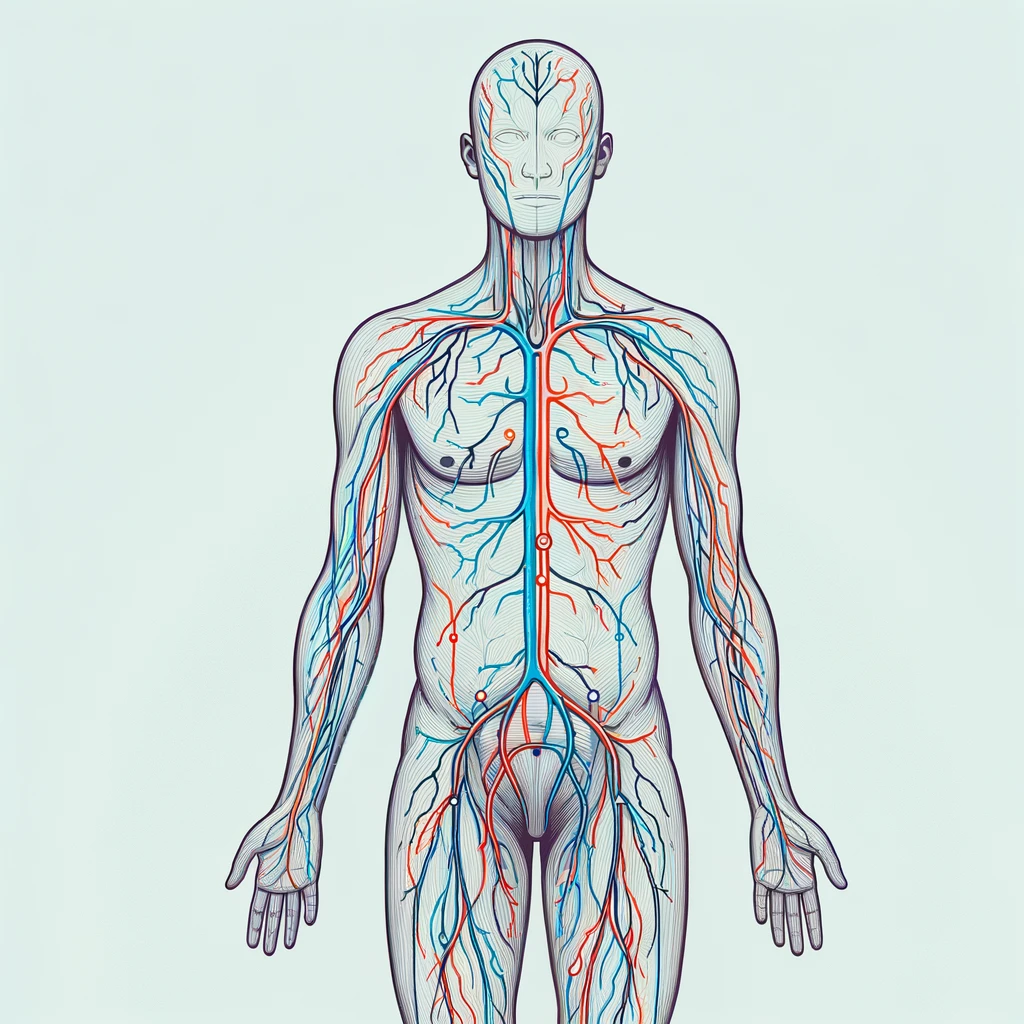

The autonomic nervous system (ANS) is a part of your nervous system that controls the functions in your body that you don’t usually think about or consciously control. It’s like an automatic pilot for your body. Imagine you’re driving a car: there are things you do deliberately, like steering and braking, and things the car does on its own, like adjusting the engine’s idle speed. The ANS is like those automatic functions of the car, but for your body.
The ANS has two main parts:
- Sympathetic Nervous System: This is like the body’s gas pedal. When you’re stressed, scared, or need to react quickly, the sympathetic system kicks in. It increases your heart rate, sends more blood to your muscles, and releases energy. It gets your body ready for action – often referred to as the “fight or flight” response.
- Parasympathetic Nervous System: This is like the body’s brake. It helps your body calm down after the stress has passed. It lowers your heart rate, helps you digest food, and conserves energy. This is the “rest and digest” mode, where your body recovers and maintains a balanced state.
These two parts of the ANS work together to keep your body in a stable condition. For example, when you’re in a dangerous situation, the sympathetic system revs up your body so you can deal with it. After the danger has passed, the parasympathetic system takes over to calm things down and bring you back to a relaxed state.
So, the ANS is basically the control system that manages all the body processes that happen without you having to think about them, like your heart rate, digestion, breathing rate, and many other functions.
